

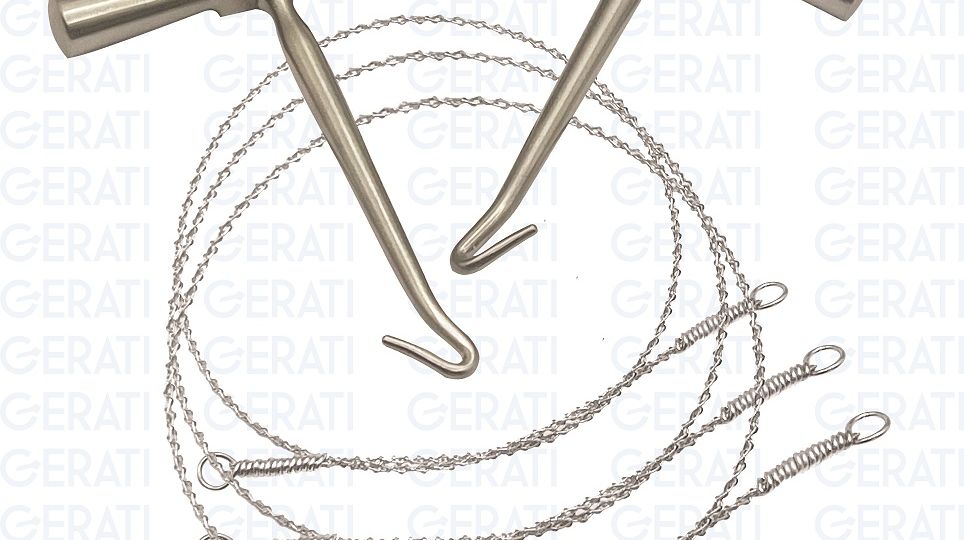
Gigli Saw Buying Guide: Sizes, Wire Types and Bulk Ordering
Choosing a Gigli saw comes down to five things: length, wire type, reusable or single-use, handles, and how you will order. This guide explains each one simply, so you can order the right wires for your theatre or your customers.
Request bulk priceWhatsApp sales
1. Length
| Length | Best for |
|---|---|
| 30 cm (12″) | Small bones and tight spaces, such as cranial work |
| 50 cm (20″) | Most orthopaedic and amputation cuts |
| 70 cm (28″) | Large bones and deep access: femur and pelvis |
Not sure? The Gigli saw set includes all three lengths with two handles.
2. Wire type: single, double or triple twisted
Twisted multi-strand wires are stronger and give a smoother, more reliable cut than a single strand. Many hospitals standardise on one twisted type for everyday use. See the options on Gigli saw wires.
3. Reusable or single-use?
- Reusable wires are autoclavable and cost less per use where a sterile services department can clean, inspect and sterilise them.
- Single-use sterile wires give a new, sharp wire every time with no reprocessing; ideal for trauma, field and outreach work and procedure packs.
4. Handles
Reusable T-handles hook into the wire loops and last for years. Order them with a set or separately: Gigli saw handles.
5. Quality checks before you buy
- Medical-grade stainless steel wire and handles
- Strong, smooth joint between the wire and each loop
- Even twist along the full length, with no loose strands
- Clean finish and clear packing and labelling
- Quality documents available from the supplier on request
6. Ordering in bulk
Distributors and hospitals usually order by length and type in boxes, often mixing reusable wires, single-use wires and handles. GERATI quotes bulk prices on request and offers private-label marking and packing.
Request bulk priceWhatsApp sales
